My tenure as full-time Professor of English at the University of Greenwich ends today (31 August 2025). Inevitably, I find myself reflecting on what the institution and I have given each other. What follows is a development of a LinkedIn post in July, on the day I handed in the keys to my office.
images of saints with books from Antonio di Ceraiolo, Predella con 9 santi martiri in the sala del Biscione, Cortona MAEC
The Necessary Distance from Distraction
There’s something about institutional life that can make you forget what you actually came to do: the endless small urgencies, the way certain personalities demand so much psychic space (and clock time), the tendency to measure yourself against metrics that don’t capture why the work matters. I spent more time than I’d like to remember caught up in dynamics that, in retrospect, were beside the point.
The sociologist Pierre Bourdieu’s concept of cultural fields illuminates this phenomenon. Academic institutions exist as contested spaces where symbolic capital is constantly negotiated through both overt competition and subtler forms of legitimation. My work on nineteenth-century periodicals has consistently revealed how media markets create similar dynamics of cultural positioning, where producers and consumers engage in complex strategies of distinction and accumulation between them and amongst themselves. The parallels between Victorian periodical production and contemporary academic practice become particularly stark when one experiences both as participant-observer.
But perhaps Bourdieu is not the only theoretical framework that need appertain. I have learnt a lot from thinking about non-capitalist economies, especially from Lewis Hyde’s reflections on “The Gift” and creative responses to the world, and from late Derrida. Indeed, I wonder if learning to notice where our attention is directed, and then to redirect it toward what actually nourishes us is a supplement or inadvertent gift that, if we have the energy and time for reflection, we can receive from corporate work under capitalism. Never interested in territory in ways that some hold close and fight with tooth and tongue and bloody nails for, at first I got upset and actively resisted. But gradually I learnt to become less reactive to those clashes of value that tear and scratch so painfully: competitive individualism versus collaborative community; fetishisation of impersonal quantification versus commitment to real human quality; abstract iron diktats versus the possibilities of vulnerable flesh; sometimes even individual rage and arrogance versus collective solutions – all manifestations of Bourdieusian competitiveness amongst perceived scarcity allied in its most extreme forms with less rational, even darker, factors and fears, shames and loves (for love isn’t always a good thing). The inadvertent gift is not indifference but distance.
Transforming Friction into Purpose
Reaction to such grating abrasion helped energise my determination to offer something new to the discipline and to sustain actively communities of ideas and practice whose people and ethos I genuinely believe in. The Victorian Popular Fiction Association (VPFA) exemplifies this commitment—a scholarly community that really does prioritise intellectual generosity over territorial defensiveness, collaborative inquiry over competitive accumulation, and welcome over exclusion, precisely in line with its commitment to questioning the violence of the canon and to broadening the syllabus.
The courage to commit to holding space for genuine collaboration and intellectual generosity; a renewed conviction that choosing to circulate rather than hoard energy, ideas, opportunities, joy, is not only its own reward but its investment; a clarified rather than just felt belief in the value of economic systems beyond and in addition to the extractive, quantitative and individually accumulative.
This conviction finds concrete expression in projects like BLT19, my digitisation initiative focused on nineteenth-century trade periodicals, to which PhD students, undergraduates and school pupils all contributed. Designed to demonstrate maximum social and academic value for minimal financial investment, and inspired in its conception by the Italian arte povera movement of the 1970s, it challenges the equation of monetary expenditure with scholarly worth. The project embodies a commitment to public access and pedagogical generosity, refusing to accept paywall restrictions as inevitable features of knowledge production.
And resilience, of course. As it turns out, resilience might be less about developing armour or invisibility and more about learning to distinguish signal from noise, turning away and tuning out so as to clear the space for creative joyful thinking without imposition but with clear and realistic acknowledgement of what we need to do to achieve what we really want. Again, not indifference but distance.
The Epistemological Stakes
This distinction between signal and noise carries methodological implications for humanities scholarship more broadly. My work at the intersection of literature, history, media studies and sociology has consistently emphasized unexpected areas of cultural exchange between popular and élite forms, across national and linguistic borders. Such interdisciplinary vision requires precisely the kind of attention management I have learned through institutional experience—the capacity to filter out disciplinary territoriality in favour of substantive intellectual engagement.
The challenge facing contemporary humanities research lies not in defending traditional boundaries but in developing new methods for understanding cultural transmission and transformation. Digital humanities methodologies, quantitative analysis, and data visualisation offer powerful tools for examining reception patterns and cultural circulation at scale. Yet these approaches remain underutilised in many corners of the academy, often due to the very institutional dynamics that privilege familiar over innovative methods, immediately profitable over speculative, the squeaky over the working wheel.
Beyond Extractive Models
It’s well known now that the contemporary university increasingly mirrors the extractive capitalism it ostensibly critiques. Faculty energy is harvested for administrative functions that do not seem to align with substantive educational or research goals. Scholarly labour is commodified through impact metrics that reduce intellectual complexity to quantifiable outputs and gamification. Student debt financing transforms education into a consumer transaction rather than a collaborative inquiry.
Yet within these constraints, alternative practices remain possible. My experience supervising five doctoral completions between 2020-2021, and my current set of six, demonstrates, I hope, how committed mentorship can embody non-extractive pedagogical relations. It’s not for me to claim this, but I hope each supervision relationship was and is based on intellectual generosity and conversation so as to prioritise student development over supervisor advancement, to create space for genuinely new thinking.
Methodological Implications
The experience of academic departure has clarified certain methodological commitments that have emerged from my research practice.
First, the importance of understanding cultural production as fundamentally collective rather than individualistic. My work 30 years ago on the London Journal revealed how seemingly individual authorial voices emerged from complex networks of editors, publishers, contributors, and readers. Contemporary academic authorship functions similarly, despite myths of solitary genius that persist in humanities culture. And today, that collaboration certainly includes AI which must, like all tools and collaborators, be treated respectfully yet critically.
Second, the necessity of attending to economic structures underlying cultural production. My chapter on periodical economics in the Routledge Handbook extended beyond publishers’ accounts to examine broader questions of cultural circulation and value creation, as does an as yet unpublished piece on the transnational economics of periodicals over the last two centuries. Such analysis is essential to my mind for understanding how knowledge production currently functions and how it might be transformed.
Third, the value of crossing geographical and linguistic boundaries in cultural analysis. My early experiences teaching in Italy, Romania and Poland, including leadership of the Crossing Cultures project that introduced gender, class, sexuality and ethnicity studies into Romanian secondary education (and which I’m still proud of for all its many faults – see here ), demonstrated how intellectual frameworks can translate across contexts while remaining attentive to and respectful of cultural specificity.
The Long View
Institutional departure offers a retrospective perspective unavailable during the urgency of daily academic life. Projects like the forthcoming Oxford Handbook to Victorian Popular Fictions represent collaborative achievements impossible within purely extractive models, and it is distance from such models that will more certainly enable its completion.
Such work requires sustained commitment to intellectual community over institutional advancement, to substantive inquiry over tactical positioning. It demands exactly the kind of attention management I have learned through institutional experience: the capacity to distinguish between genuine scholarly long-term priorities and temporary urgencies, between meaningful collaboration and performed collegiality.
The academy’s future depends on whether it can move beyond hasty, extractive models toward regenerative practices that nourish rather than deplete its participants. This transformation requires not just policy changes but fundamental shifts in how we understand scholarly value, institutional purpose, and intellectual community. It demands the courage to commit to genuine collaboration and intellectual generosity, qualities that institutional structures often discourage but which remain essential for meaningful educational and research practice. Above all, it needs the distance and careful attention to distinguish between a claim in a tick box and the realities of intellectual and social practice, and the affects and effects that dissonance and consonance between them can generate.
Gratitude itself functions as a form of intellectual practice. It requires sustained attention to what has been received rather than what has been withheld, to possibilities that have emerged rather than opportunities that have been foreclosed. Such attention, cultivated through the very institutional experiences that seemed to obstruct it, now becomes available for future scholarly and educational endeavours unconstrained by the particular dynamics of any single institutional context.
original cover for Crossing Cultures, a collage designed by a school pupil.
What follows is the Introduction to the Teachers’ Book of a British Cultural Studies textbook for 12th grade Romanian students in bilingual schools whose first edition came out in 1998: Crossing Cultures: British Cultural Studies for Romanian Students (Cavallioti Publishing & The British Council, Bucharest, Romania). ISBN 9739840094.
The Teachers Book as well as the Students’ Book were subsequently revised and reprinted several times, and formally adopted by the Romanian Ministry of Education as its official British Studies textbook for a decade.
I was commissioned to produce it by the British Council with the help of a wonderful team of Romanian teachers and academics from across Romania (in alphabetic order: Cornelia Bursuc, Adriana Cichirdan, Liminita Ganea, Zoe Ghita, Prof. Roxana Marinescu, Tunde Minulescu, Mirela Nasaudean), but the Introduction, together with the design and execution of the research project that underlay the textbook, were entirely mine.
A version of the Introduction was published as “Crossing cultures into the Reformă de Ĭnvăţământ Preuniversitar în România: autoritarism socio-politic into capacititaţi intelectuale superioare.” in Dascăl, Reghina, (ed.) Proceedings of the IATEFL-East 98 Conference, Constanţa, Romania, August 1998. Editura Eurobit Timişoara, pp. 257-266. ISBN 9789739441704. This is what is reproduced here. Many thanks to Reghina for allowing its reproduction.
I was supposed to produce a British Studies textbook for use in English-language ‘bilingual schools’ in which subjects were taught in Romanian + another language like English, French, German or Hungarian. But I redirected the project towards cross-cultural studies where Britain was treated as a mirror or Other that could be used by students to help think about their own socially constructed selves.
Crossing Cultures was actually the first textbook in Romania to introduce into Romanian schools the study of class, gender, race and sexuality at a time when homosexuality was still a prisonable offence and ethnic stereotyping was a state-sanctioned norm. It was – for Romanian schools – a very early exponent of critical thinking rather than rote learning.
Both of the places where it was originally published are now very hard to find (they aren’t digitised and the last reprint of Crossing Cultures was 2005). This is why I am posting this here, for reading it again after over 25 years – it was written before I’d even finished my PhD – I still stand by both its rigour and its pretty uncompromising ethical stance (fortunately the Ministry was open to both its stance and its rigour).
The topical references may be very dated, but the commitment to crossing cultures, whatever those cultures may be, remain fast.
Introduction Part 1: Crossing Cultures into the Reforma de Învăţământ Preuniversitar în România
The title of Part 1 of this Introduction may seem a little strange: Crossing Cultures into the Reforma de Învăţământ Preuniversitar în România. The title of a book on British Cultural Studies is transformed into a verb of motion, complete with object, by the simple addition of a preposition and a phrase. What does this mean? How does one “cross cultures into pre-university education reform in Romania”? Who is doing the crossing? How is the crossing to be done? What relation has the book to the Reforma de Învăţământ Preuniversitar în România [“Reform of Pre-University Education in Romania”]?
The following part of the Introduction will seek to answer these questions. It will do so by moving in three stages. First by linking a political with an educational system, then by looking at the idea of cognitive skills, and finally by looking at the implications for evaluation.
1. Autoritarism socio-politic into capacitaţi intelectuale superioare
The title of this first sub-section is perhaps as unexpected as the general heading to Part 1. Firstly, it is almost entirely in Romanian, when one would expect the Notes to a book on British Cultural Studies for Romanian teachers to be in English. Secondly, it sets up a dichotomy from two apparently unconnected fields: a term from political theory (autoritarism socio-politic) is opposed to a term from educational cognitive psychology (capacitaţi intelectuale superioare). Thirdly, one wonders what it has to do with the subject at hand, British Cultural Studies . In using such phrases Crossing Cultures is declaring at the outset that it is trying to live up to its name, crossing the linguistic border which separates English from Romanian. Immediately, it declares that the language which makes it is not a “pure”, but macaronic, impure, hybrid, a cross. It declares its double perspective, Romanian and non, both insider and outsider.
As for the dichotomy itself, it is only the context that may have caused surprised since you will have read of it before in the Plan-cadru [ master plan] drawn up by the Comisia Naţională de Reformă a Planurilor de Învăţământ. Under the rubric Disfuncţiile actualului plan we find the very first sentence:
Din punctul de vedere al filozofie educaţiei, planul actual de învăţămănt exprimă, în esenţă, un univers de valori şi de mentalităţi caracteristice unei culturi dominate de industrialism economic şi de autoritarism socio-politic.
The Plan-cadru goes on further to define the effects of autoritarism socio-politic on the present education system in Romania. Most of what it proposes concerns structural reform – the number of hours each subject is allotted and so forth, but it also stresses the need to reform the practice of teaching itself. There needs to be a move la placarea elevilor în centrul actului educativ, for example, and part of this transition towards student-centred teaching involves progressing beyond the inculcation of facts through memorisation. Instead of simply getting students to memorise and repeat knowledge, teachers need to ask students to do things with knowledge, thus developing what the Plan-cadru calls the “higher intellectual capacities” – capacitati intelectuale superioare.
Yet Crossing Cultures does not simply bow to the authority of the Plan-cadru. That would mean that it remained within what it is trying to get out of, the univers de valori şi de mentalităţi caracteristice unei culturi dominate de industrialism economic şi de autoritarism socio-politic. For the rest of this sub-section we shall compare first what a few other “authorities” say and then compare all this with our own research, thus following standard research practice of finding out what has been written before and then evaluating it against our own evidence.
I shall turn first to a non-Romanian academic visitor to this country. In a paper delivered at Iaşi in 1996 , the chair of ESSE (Professor Bonheim of the University of Cologne), pointed out that the research referred to [by Romanian academics] was almost without exception cited as authoritative rather than questionable; there was as good as no pitting of one scholar against another; and what is written is left unquestioned. He thought such treatment of sources was a “hangover” from the days of dictatorship when “ventilating opinions against the prevailing trend” was dangerous. The problem with such processes is that they leave Romania outside the West. As Bonheim says, such attitudes “might be said to … betray[ ] some elements of marginality”.
So far I have referred to comments from the Ministry of Education and from a foreign academic, and as a final type of “authority” before commenting on what our own research found, I shall refer to the work of a well-known Romanian academic, Prof. Lazăr Vlăsceanu. His chapter on education in the volume Social Policy: Romania in the European Context focuses on what he calls a “chronic quality crisis” in Romanian education. One of the aspects of this crisis is, again, how memorisation of facts are prioritised over what he terms “skills”. He observes, that from the point of view of injecting its pupils with information, the Romanian system is highly effective:
An illustration of this reality is the fact that an average Romanian pupil or student is highly competitive with his or her peers from any developed educational system, very often surpassing them. However, this same positive assertion cannot be made with regard to their abilities to be creative and to solve problems, particularly innovative ones. The Romanian pupil or student can reproduce a great deal but is less able to innovate. Educational policy and practice have required him or her to do nothing more than reproduce knowledge. In the short term, such a student may achieve very good results, but in the long term, he or she will lag behind because his or her skills or abilities for lifelong and innovative education, for acquiring specific learning modalities, will remain undeveloped (pp.302-3).
What all these “authorities” do is set up a dichotomy or binarism between what the ministry calls the “lower” and “higher intellectual capacities” with all the weight of respective values that “lower” and “higher” carry in the west. All connect the “lower” with dictatorial government and the latter, at the very least by strong implication, with democracy. All urge a cultural transition (which is after all the Latin word for “crossing”) from the first to the second, arguing that it is imperative for the Romanian education system to concentrate on the “higher intellectual capacities”. Otherwise Romania will become marginalised through the inability of its inhabitants to adapt to constant change, when such change is the essence of democratic capitalism.
What has this to do with Crossing Cultures, supposedly a book concerned with Britain and things British? The second part of this sub-section will seek to answer this in two ways. Initially, it will give an account of our research into both the teaching and learning of BCS in Romanian bilingual classes of English, then explain the dramatic effect of this research on the material that was piloted and what the book is now.
At the outset, we must say that our micro-research on both the teaching and learning of British Cultural Studies seems to confirm the diagnosis of the education system that we outlined above. In April and May 1998 we conducted a piloting of British Cultural Studies materials amongst 16 teachers of BCS and their students from all over Romania. We asked both teachers and students to fill in three different questionnaires each over this period, making a total of six different questionnaires, three for students and three for teachers. We got a very good response of 14 teachers and an average of about 50% of the estimated number of students in the teachers’ classes (380 replies for the first questionnaire down to 160 for the final one). We asked a large variety of questions, including what they associated with Britain, what their sources of information about Britain were, what they valued in those they considered their most important sources, what their priorities were in learning, and so on.
We found that school textbooks were the overwhelming formers of the image of Britain for these students, followed, at a distance, by British films on Romanian TV, Euronews, MTV and cinema. Of the 29% who said they listened to the World Service, more than 1 in 3 felt it to be key to their understanding of modern Britain. Their use of the media notwithstanding, students’ image-repertoire of Britain was resolutely conservative, “heritage” / historical (in fact, most students who thought they had studied BCS before 12th grade equated it with history). This implied strongly either that the media had little influence, or that the students were decoding cinema and TV along very different lines from how a British person would. Their knowledge was also that of a tourist, almost exclusively of London. Scotland and Scottish stereotypes comprised just 1% of total mentions, and Stonehenge achieved just over that. Northern Ireland was referred to by less than 0.5%, while Wales was mentioned (in passing) once in all of the 380 questionnaires that asked about this.
Stereotypes of the most banal kind overwhelmed any kind of critical awareness, forestalling any form of cultural crossing. Britain was associated with the monarchy and especially with Princess Diana who is thought of in connection with the UK as much as pop music (a recognisable trace of MTV!). But just as often the conventions of British weather recurred: fog and rain or a generalised “bad weather”. None of these were mentioned as often as Shakespeare, while other literary figures achieved just over half Shakespeare’s fame en masse. Most individual authors were referred to just once. The only twentieth-century authors mentioned were James Joyce and Dylan Thomas (one mention each).
Again despite MTV, the Queen and Diana, the gender-image of Britain was predominantly masculine: the historical, literary and musical figures connected with Britain were almost exclusively male (and dead and white).
It rapidly became clear that the vast majority of students, although all from the élite cadre, had an almost entirely non-scientific knowledge of Britain. Exactly as described in general terms above, we found in practice that students depended upon auctoritates (authoritative models) rather than on learning how to judge for themselves. This was particularly clear in students’ statements of what they thought constituted the value of sources. They were particularly concerned with the criterion of “completeness” (textbooks which they said were most important as sources were often cited as “complete”). Logically, this was connected to their model of how textbooks, the media and literature worked. This model offered connections between the sign and referent either in a simple transparent way – the sign was regarded as a window through which one saw an unproblematic and unproblematised reality – or it was idealist – that is, that the media and textbooks were revelatory of a supposed essence of “Britishness”. Only those students who had been to Britain gave any evidence at all of pragmatic learner autonomy: they alone stressed the importance of “seeing with [their] own eyes”.
What was even more surprising was the students’ cognitive dependence upon the Limba engleza textbooks for 11th and 12th grades: the opening of Bleak House for fog; Big Ben; Westminster Bridge and the Houses of Parliament on the cover; Francis Bacon; Keats; Byron; Shakespeare, of course; cathedrals… Students mentioned all these not once but many times. It is therefore no surprise that no British women writers were mentioned by the students (apart from a solitary mention of Jane Austen), since none appear in Limba engleza. There is no reference to women at all: the chronicle of events in Limba engleza (p.169) does not even mention the female franchise in 1918, the single biggest change in voting in British history . Likewise, there is no reference to the ethnic diversity which make up Britain’s most important urban areas.
At the same time we found virtually total confusion about anything to do with the capacitaţi intelectuale superioare. We checked and cross-checked students’ understanding of these in a variety of ways and found almost universal incoherence. It became clear, for example, that students did not understand what it means to decide whether evidence is relevant to the argument, or whether it is true or false (let alone to decide whether it is somewhere in between). Most said they wanted to learn how to do that, but they did not know what it meant. We found too that teachers stressed quite heavily the necessity for students to evaluate data, but at the same time they did not feel they had had much training in doing it themselves. But amongst teachers too there reigned some confusion over what capacitaţi intelectuale superioare comprised and how they could be taught.
It should not have been surprising then if teachers and students did not know what BCS actually was.
We already knew from previous reports that “Britain” had usually been taught to Romanian 12th graders in a mode which is often called “British Life and Institutions” (BLI). Sometimes this mode has been called British Cultural Studies and it is this, we feel, which has led to a great deal of the confusion. BLI is concerned with informing students of what institutions there are in Britain, and frequently with how they developed over the centuries (“institution” may be the monarchy, parliament, universities, the processes of law, family life, and many other things). It was not surprising therefore that students thought “British Cultural Studies” meant history of a certain sort. But more important than that, BLI assumes that its object of study is fixed and knowable: it’s enough to know for BLI the number of MPs in Parliament at any given time, for instance. If any “meaning” is attributed to that number at all, it will be formulated in terms of something vague and magical such as “the growth of democracy”. In other words, if institutions are given “meanings”, they are often freighted with an implicit fetishisation or abstract glorification: “Oxford and Cambridge are the best or most important universities”, or, to quote Limba engleza, “St Paul’s is a masterpiece in the foremost rank of the world’s buildings” (p.21).
While some people may well agree with or voice these opinions, they are after all opinions, not scripture. We are not saying that they are wrong, but that many people will disagree or be indifferent to such statements. BLI does not usually take differing views into account, preferring to assume a “purity of the object”. Accordingly, students can learn “simple truths” by heart – or simply copy them into their atestat papers.
Since we already knew this, our piloted materials tried to get away from BLI’s factory-like reproduction of the Gradgrindean fact . Instead they set up structures which enabled students to discuss issues we thought might interest them, all the while studiously avoiding giving much data input in order to keep Gradgrind out of the classroom. What we found, however, was that these materials did not encourage serious enquiry but rather a form of unstructured “chat” which was little more than EFL fluency practice. These materials did not seem to develop the higher intellectual capacities but rather promote facile anecdotes, not fertilise rational debate but give more life to the déjà connu.
Students and teachers were generous but at the same guarded in their welcome of these materials. They said they enjoyed using them, but…
This “but”, almost always politely hinted at rather than explicit, together with the inferred results of the piloting we mentioned above, caused an entire rethink of the project. We recognised we had taken a path that led only backwards. As a result, anyone involved in the piloting will recognise hardly a single activity that has remained the same. While certainly not BLI, the piloting materials encouraged too great an intellectual freedom. If we are justly harsh and honest with ourselves, we were encouraging a freedom without responsibility, or, in more colourful terms, we were promoting the freedom to be a couch-potato watching well-known cartoon images of Britain flutter unanalysed through semi-consciousness. Our approach did not, as we found, promote British Cultural Studies as a serious educational discipline. Our materials would not enable Romanian students to cross from the margins to the centre, but confine them on the outside with bonds of fatuity.
The methodology and discipline of British Cultural Studies which we hope is that of Crossing Cultures, fits into what the Comisia Naţională proposes, but at the same time is closely matched to the chalk-face reality we discovered pragmatically through our own research. Crossing Cultures thus combines the general imperatives of the ministry with an awareness of the concrete specifics of the subject as it is taught in Romanian bilingual classes today. The rest of this sub-section is devoted to describing some specific ways our research has affected the book.
Knowing that 86% teachers and 48% students have access to British magazines, several optional activities and one obligatory one make use of them .
Since 43% of teachers and 19% of students claim to have access to the internet, and of these 18% and 21% respectively already make use of it to find out about Britain, we sometimes suggest obtaining information from it (though never for obligatory activities). We provide a list of useful internet addresses at the end of the students’ book.
Given the students’ ignorance of British women writers, we include a class on gendering the Canon that takes as an example Christina Rossetti. Such practice of course also takes into account the Plan-cadru’s insistence on the principiu egalitaţii şanselor in giving women students the knowledge that people like them have made a contribution in a field outside the domestic sphere.
Since Diana and the monarchy are popular subjects we give students the opportunity to study them – but from unexpected angles.
Since students know a lot about London tourist sights, we offer no class on London, and approach England tangentially, beginning with the component of the UK that was mentioned least, Wales. Later there will be a class that takes Scotland as a case study for the analysis of national stereotypes and the notion of “founding myths” which have recently created a stir in Romania with the publication of Lucian Boia’s books. Northern Ireland, which was hardly mentioned at all in our survey, gets two classes and offers the opportunity to explore the importance of names and the concept of the “Other”. As for tourism, we do not confirm what students already know by offering a visit to the Tower of London, but we challenge their preconceptions by offering them the chance to study a rather well-known British tourist coming to Cluj and to Bistriţa.
We seek to counter the simplistic assumption that students must obtain a totalising encyclopaedic knowledge of a subject by breaking classes up into groups that study different and often contradictory aspects of the same thing.
Both students and teachers said they were keen on developing ethical skills, and we have given ample opportunity to do this in a profound way, taking ethics to mean not a series of behavioural imperatives and prohibitions, but as a process of relating to and constructing the world. Thus we devote a third of the core-course explicitly to the notion of what it means justly to represent the world.
Unlike the piloted materials, which were designed to allow teachers to create their own syllabus from material undifferentiated in level of difficulty, Crossing Cultures has become structurally developmental, starting from first principles and each class building on what has gone before, until at the end of the year students are in a position to combine and apply concepts in a freer way. Crossing Cultures thus places the emphasis on developing cognitive skills in what the Plan-cadru calls a coherent way.
It also fulfils the Plan-cadru by making inter- and trans-disciplinarity a feature: besides having classes on literature, it has classes on science as well, and even in one case on science and literature. It has been careful find out what students will have studied in earlier grades and to make reference to textbooks students may well possess at home and have used. Furthermore we refer to what they study in 12th grade philosophy and science and call on students to make active use of what they have learnt in those classes.
Crossing Cultures places students at the centre of the learning process by getting them actively to “discover” and debate knowledge, arrive at their own definitions, evaluate the validity of different points of view.
Like the earlier piloted materials, Crossing Cultures is primarily concerned with teaching the higher cognitive skills –the capacitaţi intelectuale superioare and not teaching facts to be replicated. But unlike the piloted materials, it starts at the base of the cognitive pyramid by offering a large amount of up-to-date “knowledge” for students to learn to manipulate. Note that when we write “a large amount of up-to-date knowledge” we do not mean that students need memorise huge amounts of material. On the contrary, knowledge can be given to the students so that they know it only for a short amount of time, or can see it in front of them to refer to. This is the purpose of the often long readings that we offer: they act as temporary banks of knowledge that students can draw on for the purposes of the class only.
Crossing Cultures is opposed to autoritarism socio-politic and the marginalisation that that has caused. Refusing to derive its existence merely from the negative virtue of opposition, however, and thereby fall into the pit of unstructured “chat”, it offers a third way: a positive and disciplined training intended to enable Romanian students confidently to move themselves not only to the centre, but to wherever they wish to go.
As we said at the beginning, Crossing Cultures is a verbal phrase, not just a static title. As such, Crossing Cultures translates the Reforma into the classroom.
The Wicked Boy was very successful, garnering great reviews (here’s the Guardian‘s, for example) and winning the 2017 Mystery Writers of America Edgar award for Best Fact Crime. My students used to really like it when we taught it, especially as the murder occurred not too far away from Greenwich, across the river in Plaistow.
The book deals with an 1895 matricide by a 13-year-old boy, Robert Coombes, in the working-class East End of London, along with its context and its aftermath: the squalid city, the discovery and investigation of the crime, its coverage in the press, the possible effects of the boy’s sensational reading, his trial and imprisonment, his eventual release, service in World War I, emigration to Australia and his rescue and nurturing of a boy who was being abused.
I have to say though that my take on the book was very different from the reviewers’ – much more theoretical for a start, and much more concerned with thinking about the emotional effects it had on us readers in the classroom. We read it in the light of crime fiction rather than “true crime,” for while we noted its very clear differences from fiction, we also noted a similarly powerful pull to read it, along with its development of characters and its forensic portrayal of context as a set of clues.
For a start, what does it mean that “Kate Summerscale” is the narrator of The Wicked Boy? Can we be sure that the “I” of the narrator (which emerges strongly only in the last part) is a simple reference to the author? Are we sure the narrator is not a constructed character? The fact that the narrator shares a name with the author might be confusing, but hardly unique, especially in postmodern detective fiction (at one point Paul Auster’s deranged detective-protagonist meets Paul Auster in The New York Trilogy). The “I” of the narrator seems very carefully constructed throughout, even when – especially when – it does not appear directly but simply as a collector of evidence or as a (sometimes vacillating) point of view. To me, it is as much a character as “Robert Coombes.”
I’m sure you’ll have noticed too if you’ve read The Wicked Boy that not only does the protagonist Robert Coombes change over the course of this “true crime” volume (it shares that kind of character development with the Bildungsroman) but the narrator does as well. Her investigations in the archives gradually lead her to discover unexpected secrets – that maybe Robert Coombs was more than just a “wicked boy” defined by the law and then “archived” – arrested, shut away in a lunatic asylum, forgotten. We gradually understand that “Kate Summerscale,” the character/ narrator, wants to get close to the subject of her investigations. She wants to understand him. By p. 197, she can surmise that “To survive the horror of the murder, Robert needed to forget. To recover from it, he would need to remember.” At the end, she even touches the hand of a man Robert helped survive abuse:
As I stood up to leave, Harry smiled and reached over to clasp my hand. He seemed glad to have told me what Robert had done for him. When I started work on this book, all that I had known about Robert Coombes was that he had stabbed his mother to death in the summer of 1895. It was astonishing to hold the hand of a man whom he had saved from harm. I still couldn’t be sure whether Harry knew about the murder. I hoped that he did, and had loved Robert anyway.
Wicked Boy, (pp. 196-7)
How can we understand this astonishing transformation from the coolness of the investigator we hear first, a narrator who seems to be on the side of forensic investigation and the upholding of due legal process, to the woman story-teller (yes, at the end the narrator is strongly gendered) who proposes a higher justice than the law can offer, a justice that gives us all a right to be loved, to be redeemed?
This doesn’t seem in the end to be a cool investigation of just the true “facts” of a crime: the narrator’s rooting in the archives seems to have changed her as well as her view of her central subject.
“Kate Summerscale” as forensic narrator concerned with weighing up the evidence uses a panoply of primary resources: newspapers and periodicals, books (often in rare or special collections – see for example note to p. 11 (p. 311) Archer Philip Crouch, Silvertown and Neighbourhood: A Retrospect (1900); a note to p. 253 [on p. 343] lists 3 rare book sources), manuscripts and paper documents in particular locations (E.g. “BRO (= Berkshire Record Office) D/H14/A2/1/1” – note to p. 222 [p. 337]; the diary of Charles Francis Laseron in Mitchell Library, State Library of New South Wales); secondary sources – the included bibliography is extensive and impressive (e.g. a note to p. 11, justifying descriptions of trams refers us to Jerry White, London in the Nineteenth Century: a Human Awful Wonder of God (2007)). The narrator later – when it becomes “I” – even records personal interactions – phonecalls, emails, casual encounters, interviews (see pp. 284-5, 303-7).
Archives are fundamental to Summerscale’s enterprise. But how do they lead to that tremendously affecting moment when she touches the hand that touched the hand… ? What might we mean by an “archive,” then, and what effects might that “archive” have on our understanding of the text and on the narrator’s relationship with the subject of her research?
Derridean Archives
Reflection on the nature of archives is hardly new. Twenty years ago, Marlene Manoff was able to write that “researchers [have been] proclaiming the centrality of the archive to both the scholarly enterprise and the existence of democratic society” (“Theories of the Archive from Across the Disciplines, Libraries and the Academy, Vol. 4, No. 1 (2004), pp. 9–25, p. 9) and even more has been written since then.
Freud’s couch and desk in the Freud Museum, 20 Maresfield Gardens, London
The turning point in archive studies is usually put at Derrida’s Mal d’archive [“archive sickness/ evil”],a lecture delivered at the Freud Museum in North London in 1994, and published first in French as Mal d’archive: Une impression Freudienne (Éditions Galilée, 1995) and in English the same year in the periodical Diacritics (Jacques Derrida, “Archive Fever: A Freudian Impression” translated by Eric Prenowitz, Diacritics, Vol. 25, No. 2 (Summer, 1995), 9-63).
Derrida had an audience of psychoanalysts and his lecture is very much addressed to them. Yet one of the many fascinating things about Derrida’s essay is how it has been treated by historians and critics. It’s as if they had read only the first few pages in which the archive is defined in historico-political terms. They forget that the lecture is actually about the nature and origin – the archives – of psychoanalysis composed for psychoanalysts in the symbolic “home” of psychoanalysis of the refugee Freud at a particular moment. Nonetheless, let’s follow the historians and literary historians, at least initially, and consider what they have taken from the lecture.
One of the commonest points that is made concerns how Derrida explains in his opening pages that – in his usual etymological and serious-fun play on words ‑ an “archive” was originally the building where the written laws of ancient Athens were stored. Only the magistrates of ancient Athens, the archons, were empowered to place them there, to put them in order and to interpret them.
In these introductory pages, the archive is always, according to Derrida, a place of “house arrest”, involving both the law and the idea of an enclosed place from which documents cannot be removed or put into general circulation: indeed, there’s a curious and all-encompassing, circular relationship of the archive and the law – the law proclaims who can access the archive which is itself the repository and authority behind the law. The “archive” is what gives the archons their power and enables them to keep it. It does that by keeping the laws secret. Only the archons can reveal those secrets, and it’s in revealing them – bringing the laws out from the archive and interpreting them – that they most clearly exercise their power.
In typically Derridean logic, without the idea of an archive, neither secrets nor laws could exist. The archive is the guarantor of the law by virtue of keeping it secret (of course Derrida is thinking of the Freudian unconscious and the Oedipal prohibition here). But then, as soon as an archon outs a secret or a law, it is ready to be archived and forgotten again, becoming again accessible only to a few. It’s just as if an archon (or, we might think, an artwork or therapist) were to show us a scroll on which laws are written only for it to be put back on its dusty shelf again, while we get on with our daily lives as before, having been entertained and distracted by the revelation (and perhaps a legal infringement or temporary escape of the unconscious) for a moment.
Following on from Derrida’s argument, it’s entirely logical that, if we think an equal-opportunities-for-all democracy is a good idea, we who are not archons with power will rebel – we will want to wrest the archons’ power from them. Power in such a democracy, we think, should circulate. Pursuing that logic further, all of us should want to be able to reveal secrets and show how the world “really” operates according to laws hidden from other people but not from us. Knowledge is power – we’ve been taught that since the beginning of school – and we want that power.
While for most of the time we just get on with life, there remains a nagging doubt – more acute for some of us than others – that the archons may give us only one version of ourselves and our history. They may say “you are a Wicked Boy” or “you are nothing but the murderer of your former employer” (Mary Braddon’s Henry Dunbar) or “you are a sexual experimenter and accidental suicide” (P.D. James’s Mark in An Unsuitable Job for a Woman) or a “serial bigamist” (Richard’s Marsh’s Judith Lee story “Matched”) or “a dangerous woman who can blackmail a king and thereby destabilise the whole social order” (the Sherlock Holmes story “A Scandal in Bohemia”).
But is that all there is to the identities of such characters – or of real people? Maybe we can prove that the archons don’t possess all the secrets as completely as they think, that we can observe and come to logical conclusions better than they. Maybe the Wicked Boy is more than that label. Even if we just want to assert ourselves and show the world that we are not simply as the archons describe us, we will want to show that we are, in short, better archons than the archons, or, this being a democracy, that we are at least as good as them.
We search for a trace that allows us to imagine we are rescuing secrets that the archive has hidden from the world.
Whole infrastructures have grown up according to that logic. Institutions like schools and universities aim to teach us to find things out for ourselves – or at the very least, teach us that there are secrets out there that we need to uncover. They tell us that we can become archons if we work hard enough. Such institutions operate doubly though: they both make a few of us feel like archons with the key to knowledge in our pockets or purses, but also they teach large numbers of us that we can never hope to understand the secrets of the archive. In the latter case, institutions teach us to be “the populace” – the ruled not the rulers, the powerless not the powerful.
Such thinking is what Derrida means when he writes that any “science of the archive must include the theory of [its] institutionalization, that is to say, at once of the law which begins by inscribing itself there [in the archive] and of the right which authorizes it.” (p. 4) Institutions like schools and universities are gateways to the archive: only a few of us are granted the right to pass inside where we can decode and profess the secret laws of the universe and of texts.
As we’ve understood by this point, the goal for those of us who root around in the archive is, according to Derrida, to find the previously secret. What that secret comprises is closely and inextricably bound up with two presuppositions: first, the idea that we are discovering a unique thing that only we know and, second, a powerful feeling – the magical, mystical moment of enlightenment we experience when we discover the secret, the authentic instant where we neither know nor care if we are the researcher or the researched, the ghost or the haunted, writer or written, archive or archon. We search for evidence where “the trace no longer distinguishes itself from its substrate,” as Derrida puts it on pp. 98-9 of Archive Fever – everything dissolves thrillingly into a feeling of oneness (very Lacanian psychoanalytic that). The past and present fuse, and in that moment death is overcome. To quote Tennyson’s “Break, Break, Break,” we seem to touch a “vanish’d hand” and hear “the sound of a voice that is still.”
Derrida’s way of conceiving the “archive” – at least at the beginning of his lecture – has not gone unchallenged, even though it has been very influential. Within standard historical and literary historical discourses, his proposal raises questions such as the following in Ed Fulsom’s excellent essay on “Archive” in the collection Literature Now: Key Terms and Methods for Literary History.
When we read Derrida on the archive, questions proliferate: how much of what we could think of as archives in fact exists outside of official archives and resides instead in garbage heaps or even in lost voices still travelling somewhere on sound waves? How much exists in the endless writings stored on tapes or records or disks or other outmoded technologies that are difficult if not impossible to access? How much of an archive is stored in the deep and inaccessible parts of any single human brain?
Ed Fulsom, “Archive” 23-35 in Sascha Bru, Ben De Bruyn and Michel Delville, Literature Now: Key Terms and Methods for Literary History( (Edinburgh Up, 2016), p. 23
Of course these are sensible questions within the discipline of history, including literary history, and they are central to postmodern writing that deals with the past. The garbage heap that Fulsom regards as a possible repository of secrets is not sealed from us as official archives are; the memories stored in the heads of our loved ones are, in theory at least, accessible to us. How can we claim therefore that these kinds of archive are ruled by the archons of knowledge? History, archaeology and literary history of the last seventy years has indeed raided both rubbish heaps and outmoded technologies as well as oral accounts by the living and the dead. Such sources are (again in theory) freely available to all.
There are two issues here though.
The first is that what is called “garbage” is determined by the powerful. We may not feel powerful when we throw the history of our drinking in the recycling bin, but we are much more powerful than the malnourished person who lights on our bottle in a rubbish dump in China. Texts once regarded as garbage because they didn’t conform to what was thought acceptable literature by the archons of culture may disappear altogether, recycled as note paper or toilet paper, leaving – at best – only the trace of their existence behind in catalogues (we recall how very few copies of the mass-market London Journal survive even thought it was read by 10-12 times more people than Dickens’s Household Words).
Secondly, to raid garbage heaps so that secrets are revealed requires skills – and what those skills are and who has them are determined by archons. So even if material may be freely available, to investigate it so that it yields its valid secrets requires access to the secret laws of the archons. And the loved ones whose own stories we’d like to hear may have understood that they are garbage according to the powerful and so may have deleted or altered them to accord with what they think is acceptable. How can we say in a simple way, then, that such stories are accessible?
(Perhaps indeed the archons, the archives and institutions are not just outside us. They are us. We have at least to negotiate with them to get our “I”s, our speaking selves, to speak at all)
The Forgotten Shelves of Derrida’s Archive: Psychoanalysis and Ethnic Boundaries
So far so good. That kind of institutional thinking is very useful for historians of all sorts. But what historians seems have elided and forgotten – “archived” to use Derrida’s terminology (or maybe “shelved” or, as I’ve done above and am.doing here, “bracketed”) – is that for Derrida psychoanalysis is at the heart of our concepts of the archive, and vice versa, for how we imagine an archive lies at the heart of psychoanalysis. And psychoanalysis is concerned to investigate our identities – who we are inside. It does not conventionally excavate the external power structures and processes that we are constrained and enabled by.
The “theory of psychoanalysis, then, becomes a theory of the archive and not only a theory of memory” writes Derrida at one point (p. 18), challenging a once dominant notion. And then he goes on to ponder the possibilities of an alternative history in which Freud uses a different technology which uses a different archiving mechanism – email, for example: how would psychoanalysis have been conceptualised if Freud had communicated with his friends and colleagues using email instead of pen and paper and the postal service? That too is a famous and oft-quoted point, and directs our attention to the “paratextual” and how technology affects our creation and understanding of texts (something I’ve written about quite a lot elswhere). But the point surely is that identities, in so far as they are an effect of archives, are both personal and institutional.
By far the greatest part of Derrida’s lecture – the part that historians neglect – is taken up with a thoughtful discussion of the claim by Yosef Hayim Yerushalmi in Freud’s Moses: Judaism Terminable and lnterminable (New Haven: Yale UP, 1991) that psychoanalysis is essentially Jewish. Derrida’s lecture is in reality a targetted intervention that needs to be read in its time and place, as a response to a Yarushslmi in the house of the refugee Freud, not as an ahistorical pronouncement.
Yerushalmi, writes Derrida, is the exemplary historian, exhibiting
the desire of an admirable historian who wants in sum to be the first archivist, the first to discover the archive, the archaeologist and perhaps the archon of the archive. The first archivist institutes the archive as it should be, that is to say, not only in exhibiting the document, but in establishing it. He reads it, interprets it, classes it.
Derrida, 1995, p. 38
And it is precisely this institutionalised “desire of an admirable historian,” not what has been left out of an archive on the rubbish dump of history or what technology is used to preserve it, that Derrida asks us to question. It is this “desire of an admirable historian” that is “archive fever”, the mal d’archive, the sickness/ evil in the title of his lecture. Desire is the foundation of the archive; the rational institution we see, the home of the Law and secrets, the Archive, is built on something quite other than the rational. And desire in turn is built on lack, on absence (we can’t desire something if we really believe we have it already).
In other words, we search the archive not really for rational knowledge of the secret or the law, but a feeling, an experience – a sensation that something is present when it can’t be. We root around in the dust because we want to encounter something or someone close up – in absolute closeness that fills the absence, the lack, beneath desire. We feel a void in everyday life, a distance from it – we are alienated from ourselves and from others, perhaps – and our investigations into the archive are a search for a way to bridge that gap, fill the void within ourselves, encounter the Other. This sensation generates a feeling of Truth, of access to what Lacanian psychoanalysis calls the Real. We want what Derrida calls elsewhere “presence”, the feeling that someone is right next to us, in communion with us. We know that such “presence” is just a metaphysical, impossible fantasy, but that doesn’t detract from its magnetic pull. This drive for such a sensation is what I tell my students is “the fiction of detection,” the fantasy that we have solved the mystery, revealed The Secret.
This psychoanalytic reading of the archive has little, it seems to do with the power relations around the archive that the historians are interested in. But Mal d’archive is a psychical drive – and it certainly doesn’t belong to any ethnic group. In fact it’s a universal human drive, claimed Derrida, rightin the home of the refugee Freud.
For Derrida has, it turns out, raised the question of the archive, its institutional violence and evanescent material technological basis, its sickness and fevers, to argue against Yerushalmi’s argument that psychoanalysis is the property of just one ethnic group, and not of the world. Yerushalmi, argues Derrida, is on the side of the archons and institutions who want to keep the secrets for one group. He is policing the archive for reasons he should reflect on.
Such a tactical move is perfectly in line with Derrida’s commitment to an ethics of hospitality that dislikes border controls and welcomes Others, including refugees like Freud (however problematic he saw that commitment – see Judith Still’s wonderful Derrida and Hospitality, EUP, 2012; and the two volumes of translations of Derrida’s 1995-96 seminars on Hospitality which came out in 2023 and 2024 from Chicago UP). It is also in line with his commitment to acknowledging the role of the irrational in what can seem simply rational, a commitment that itself is an inheritance from psychoanalysis.
Derrida is asking us – and Yerushalmi in particular – to use the insights of psychoanalysis to examine the foundations of our own stories – the discourses and institutions that govern what we do without our even realising it. In the house of Freud, he’s asking us to welcome truly Freudian thinking.
Archives and The Wicked Boy
So how does all this connect to The Wicked Boy? First of all, doesn’t “Kate Summerscale” (the narrator) set herself up as an archon of some incredible power? Goodness – all those archival sources! Just look at the notes! All those newspaper articles that she’s used to construct her story!
To impress us with her credentials as an archon in the orthodox institution of knowledge is surely the purpose of the notes and the bibliography. They are a sign that she must have worked for years over crumbling paper copies in dusty libraries and arcane archives. She’s got the skills and the knowledge so she’s closer to The Secret than we could ever be. She’s just like a private investigator at the top of her game, a Cordelia Grey or Margaret Wilmot or – since she narrates in the first person (so it turns out) – a Judith Lee.
Well, let’s dig a bit deeper and excavate “Kate Summerscale”’s own processes of generating secrets – let’s reflect on that character’s archival processes to reveal some secrets ourselves.
First thing, it’s clear to me (as a mini-archon in my own way) that her story is based mostly on online databases – especially the British Newspaper Archive (BNA). Rather than spend years in the paper archive, Summerscale has spent days in the digital archive, using keyword searches. You can do it easily enough yourself – just type for example “Robert Coombes” in the BNA and see what comes up. Other books she cites are freely available online through Google books or archive.org.
She hasn’t admitted any of this, though: her bibliography doesn’t list the BNA or Google books, only individual newspapers. Rather, Summerscale has mystified and glamourised her role as an archon to give us the impression that we are getting real value for money – that we are buying a huge amount of her labour. Of course the author hasworked really hard – just not in the way that the creation of “Kate Summerscale” the narrator suggests. This isn’t deception on her part, just a conventional veiling of process that accords with the dominant rules of the knowledge-producing institution: academics still tend to cite the paper versions of primary sources even if we’ve found them online. It’s an unspoken institutional rule that either you know (that proves you are an archon) or not (you’re “populace”).
Second, let’s look at the metamorphosis of “Kate Summerscale” the narrator/ investigator. At first the narrator starts off like a cool police reporter: the tone is reasonable and controlled, a careful and very detailed description of events and environments. We might note the extraordinary emphasis on smell, for example. These days, in our hygienic world, we are so used to things not smelling that this emphasis, noted by several reviewers, comes as something of a shock: the stink of the ship Spain – a mix of “animal flesh, urine and excrement” (p. 12) – the powerful smells of 1890s London – “sour urinous… musty caramel… rotting cow carcasses… simmering oranges and strawberries… boiling bones and offal… bird-droppings… rubber, caustic soda, sulphuric acid, telegraph wire, dyes, creosote, disinfectant, cables, explosives, poisons and varnish…” (p. 13).
Yet all this horror is presented in calm forensic detail, with even rhythms and elegantly composed sentences. We are not surprised when the body is discovered and dispassionately described as if in a police report (see especially p. 41). “Kate Summerscale” here is very much on the side of the law and the reasoned forensic use of the archive. We readers seem to be positioned at this point as the jury deciding the wickedness or otherwise of the murderer. Did he do it? Well, yes, probably. But we are also being asked to judge whether he did it because of his environment (of which the smells, and the brutality of others, are a pungent part) or whether because he is essentially wicked inside, evil in nature, worthy to be thrown with other rotten characters on the garbage heap of history. The very asking of the question, though, opens us – and, with more certainty, the narrator – to change: which side will the narrator and we plump for?
For “Kate Summerscale” does not stay the same – her relationships to the law and to the archive are not fixed throughout. As I suggested before, her investigations in the archive gradually lead her to discover unexpected secrets – that maybe Robert Coombs was more than just a “wicked boy” defined by the law and “archived” – arrested, shut away in a lunatic asylum, invisible, secreted. We gradually understand that the narrator has been caught up in her investigations. This suggests, then, that the book is a Bildungsroman not just of the object of research, Robert Coombes, but of “Kate Summerscale” herself. And it’s archive fever that provokes this change.
The Archive is not just evil or repressive, then, for it can also be an engine of transformation: the power of the mal d’archive is not confined to the “desire of an admirable historian” to make the world conform to himself, but can open the possibility to encounter the Other, an Other.
What she’s doing becomes really clear when we find that, because “Kate Summerscale” herself is shut out of the archive relating to the asylum, she keeps padding around its perimeter, treading textual ground that might offer a glimpse of Robert – the descriptions of Broadmoor where he was incarcerated, her hunt for photographs (are they all definitely of Robert Coombes?). We get closer again when she tracks him down to Australia and locates people who knew people who knew him.
We discover that, like the detective Cordelia in P. D. James’s An Unsuitable Job, she wants to get close to the object of her investigations, to understand him, to make him present to herself and to us. She wants to reach out across the void of time, hear his voice and touch his hand. She wants to raise the dead. In so doing she seeks to elide the binaries of past and present, perhaps too of fiction and fact, to touch a “vanish’d hand” and hear “the sound of a voice that is still,” to undo death even while knowing that that is impossible. It is utopian, fantastical, a resource of hope, a reason to change.
That impossible desire to get close is surely the secret of why we continue to read, why we are touched by the two conjoined stories of “Kate” and “Robert” that come together in the end. “Kate” may not be able to touch Robert’s hand, but she can touch the hand of a man who touched him, and she can hope that he feels the same way as she does about Robert. This is the metaphysics of presence in literary and historical action: we know such desire for presence is impossible, but we keep hoping nonetheless. That is a glory, and a tragedy, a source of grief and of pleasure, a hope and an acceptance of defeat.
Archives, then, may always be political, institutional, systemic, but they are also emotional and experiential. They may harbour secrets from the past and try to ensure closure and certainty, but the desire archives excite can also be a driver to the future and to change in politics, institutions, systems and the self. What the narrator of The Wicked Boy does is show the transformative effect of archive fever so that, in the end, we can welcome what before we feared.
We can, as “Kate Summerscale” models for us, visit the archive not only to become archons who erect and police boundaries, but to become, also, hospitable.
from Poem 7 of 1897 American edition of Tennyson’s In memoriam (orig. 1850), illustrated by Harry Fenn (Fords, Howard and Hulbert, New York)
In 2010 I organised a conference onAngels and Demons at Canterbury Christ Church University. This resulted in a special number of Critical Surveyon the topic in 2011. Keen to promote my colleagues’ work rather than mine in the limited space available, I never expanded and published the paper at the conference that I had only a few days to prepare for when a speaker was forced to withdraw. I had to use what was close to me as a person physically, intellectually and emotionally: that shows!
The other papers looked at the first and last words of the title. Typically for me, I examined the smallest, neglected word: the ‘and’ of the title.
Here it is, more or less as delivered, in three parts.
Angels and Demons: Luluand the Copula
Act1
Nothing like beginning at the end, especially the end of Alban Berg’s unfinished opera Lulu, and a double murder by Jack the Ripper of someone we hear described as an “angel” and of the woman in love with her, a personification of the New Woman, the Countess Geschwitz, who plans to leave the garret to go to university to study law and fight for women’s rights.
NB CONTENT WARNING for violence : from the 1979 Chereau production of the completed three-act version
The important point is that this scene, the last from the opera, pretty unequivocally suggests that men really don’t like women! Men murderers of angels really are devils, aren’t they?
From the way the countess’s decision to fight for women’s rights is thwarted by her murder, you may have decided already that Jack is a representative figure of something beyond himself, perhaps standing for the general category “misogynistic, conservative, reactionary man”. Certainly the idea that Jack represents the revenge of men on uppity women is a very common interpretation. For some critics, the work even becomes the tragedy not of Lulu, but of men who are forced to violence by such women (not a conclusion I agree with I should add).
And then the music… this isn’t just any old double murder of women by a man, of course, but a double murder in the 1930s high modernist opera by Alban Berg: Lulu, a work championed (and criticised) by no less an enemy of mass culture than Theodore Adorno.
One might well ask whether the demon is not Jack the casual murderer of would-be liberated New Women, or even women who supposedly make men behave in violent ways, but exclusive avant-garde texts like Lulu. After all, everyone knows who Jack the Ripper is – he has generated a vast amount of material dedicated to him. We might say he has a vast fan base. We even go on Jack the Ripper tours in London’s East End. Jack is popular. Berg’s Lulu, by contrast, is hardly the Glaswegian singer who won the 1969 Eurovision Song Context with “Boom Bang-a-Bang“. It’s “hard”, difficult, unpleasant; this Lulu doesn’t follow the musical rules we are familiar with.
Yet it’s clear just from the inclusion of the figure of Jack that the opera attempts to take on board the violent hierarchy of popular and exclusive. For the conjunction “and” can be used in various senses – inclusion yes, but also to signal (and perhaps interrogate) a hierarchy of difference: good and evil, man and woman, angel and demon. In questioning the hierarchy of popular and exclusive as well as the other binaries I’ve just mentioned, Lulu is like many operas of the period, such as Ernst Krenek’s Johnny spielt auf, or several of Franz Schreker’s operas (perhaps most of all Die Gezeichneten). Certainly in some places it reworks then-popular dance forms, jazz rhythms and instrumental colourings. Lulu even takes on the film industry – already dominated by Hollywood by the time the opera was being written between 1927 and 1935. A performance of Lulu as Berg wrote ithas a film at its very centre, a 3-minute action-packed short very different from Pabst’s lingeringly aesthetic film on the same subject as the opera, Pandora’s Box of 1928, starring the wonderful Louise Brooks. Despite the claims of a few breathless writers, even the Pabst film was never “popular” in any sense. When it premiered in Berlin in January 1929, it was almost entirely ignored in the excitement of the new “talkies” that were grabbing public attention in Europe and America. Brooks herself was slashed by the critics. It took until the 1950s for the film to be appreciated by the cognoscenti in the art house. Unlike the retellings of the tale and figure that Karen Littau and Shelley Berc have detailed for us, the Lulu I’m writing of here has never been popular for all its engagement with elements of the popular. Does that mean that I, as a historian of popular narrative, cannot or should not engage with it? Is it heretical of me to do so?
Like Pabst, Berg based his work on a pair of plays by the fin-de-siècle German playwright Frank Wedekind, Earth Spirit and Pandora’s Box which Wedekind worked on between 1892 and 1913. Many of the music critics who discuss the opera love the music. It is a highly ingenious form of dodecaphony and parades the signs of exclusive distinction that require long training to decode. But they regard the Wedekind plays as belonging on the junk heap of literature, too low for the sacred realms of opera. What was Berg doing when he chose to set this shabby little shocker that sold out to contemporary bourgeois notions of the femme fatale and comprised a collage of the vulgar misogynistic commonplaces that Otto Weininger systematised in his 1902 Sex and Character? Wedekind’s Lulu plays seem uncannily to agree with Weiniger’s fantasy that Woman has no ethics, logic or soul and therefore can only see with a blank stare, that Woman is totally materialistic and has no spiritual or intellectual side. It’s all wonderfully summed up in a notorious quotation from Weininger, “Man possesses sexual organs, her sexual organs possess Woman.” The New Woman we see murdered at the end, who plans to go to university to study law so that she can fight for women’s rights was, so her beloved Lulu tells her, half a man. Lulu herself can be regarded only too easily as the quintessence of Weinigerian Woman, as a one-sentence narration of her life will demonstrate. Having started as a child prostitute and thief, Lulu goes through three husbands, murders the last of them, escapes from prison through the machinations of her lesbian friend, runs off to Paris with the son of her third husband, and ends in a London garret as a prostitute.
Wedekind wrote his original version as Die Büchse des Pandora, ein Monstretragödie (“Pandora’s Box, a Monster Tragedy”) between 1892 and 1894 as a single 5-acter, monstrous both in length and subject matter. If you thought the ending in the opera was shocking, in the original Jack the Ripper explicitly knifes out Lulu’s genitals and fantasises about how much the London Medical Club will pay for them. Partly because of this ending, Wedekind’s publisher thought the Monstretragödie would provoke prosecution for obscenity. He therefore persuaded Wedekind to publish just the first three acts of his play which dealt with Lulu’s marriage to each of her three husbands. Subsequent versions of the play which Wedekind wrote (including splitting the original 5 acts into 2 plays) attempted to negotiate a path between the censors and desire for popularity through sensation. Berg condensed his opera from the published two-play version – we know from a surviving seating plan that he went to a private performance of the second play in 1905 and that this performance and its paratexts influenced him. By recombining the two plays, therefore, Berg was returning them to their original structural integrity.
To me just as shocking as the murders is the number of music critics who choose to ignore what they regard as an unworthy text to concentrate instead on analysing the fabulous intricacy of the music – Adorno amongst them. What is at stake in this violent excision of words? This what the other parts of this blog will seek to answer.
The previous post closed with a perhaps outrageous claim to have noticed something that specialised music critics have not. But the point is not difficult to argue. Let’s look again at the extract from the score I printed in the previous post.
Lulu centre again – but note the direction to the performers to put mutes on their instruments, and the fade of the vibraphone from pp (very quiet) to ppp (extremely quiet)
Notice the directions nehmen Dpf in the middle of the page – put the mutes on. For the music is played backwards with all possible instruments muted. This signals a difference from the first half, an addition subtle on the page but decidedly audible in performance. To an audience listening as opposed to a reader reading, that is, with the remediation of the text through the technologies of musical instruments from the printed visual to the aural, the palindrome does not signal a suspension of the arrow of time. Rather, it emphasises time’s passage by highlighting difference in similarity.
This is certainly the case with the narrative palindrome that Berg creates. By the last scene, when the husbands start returning and taking their revenge, we in the audience have been so well trained by the patterns in the opera that we know the narrative law. And we are given a choice. Do we simply accept the law as an inevitable given, as part of the human condition, or do we rebel against its violent inflexibility? Do we want this structure to be enacted?
I want the ending to be different. I want Lulu to escape Jack and for the self-sacrificing Countess to study law and fight for women’s rights. I do not want men to take revenge, as by this time I, though a man, have come to see Lulu as a human being. I want transcendence from my own gendered, socialised subject position, I want the cycle of suffering to be broken. My engagement with the performance and its technologies (as opposed to just with the technologies of print) has caused me to distance myself from a community of people who automatically assume the rightness of the lex talionis.
Alternatively, if I do want it – and parts of me do, confiteor – I am encouraged to ask myself about the moral stature of my sadistic misogynistic desire, my conservative desire to remain within a community of vengeance.
Lulu in the final scene puts my progeessive and conservative desires in dialogue with one another.
By listening to and watching, by experiencing a performance on stage, I, already split, have also become linked to Lulu. If the title of the opera follows the tradition of naming a work after the solitary protagonist like Tosca and Fidelio – it’s not Tristan und Isolde, or A Village Romeo and Juliet ‑ I nonetheless supply both the conjunction the missing adjunct: Lulu and me. Who of these is the angel, who the demon? Am I Jack or Lulu or both? The and here is not, as I’ve already explained in a previous post, a simple conjunction: it is an implied copula fot it suggests identity through linkage. Lulu and me suggests that I am Jack or Lulu or both?
In this last part, I turn to one of the many recurrent passages that is never subject to palindromic treatment, the coda to the sonata form associated with Dr Schön, Lulu’s third husband. This is the music of Lulu’s desire to be loved by Dr Schön, the man she wanted to be married to at the start. She wants him to recognise her as a valid human being. She wants him to recognise that she is. It’s all she’s ever wanted, as she says in one of the terrible quarrels they have. The first time the musical passage appears, she recalls her childhood as a street urchin and thief in spoken words that ensure the audience understands them:
“ ‘My husband’… If I belong to anyone in this world, I belong to you. Without you, I don’t know where I’d be. You took me by the hand, you gave me food and clothes, even though I was trying to steal your watch. Do you think I can forget that?”
Alban Berg, Lulu, vocal score, Universal Edition, 1936: 81 (“Coda der Sonata”)
Memory binds Lulu to Dr Schön: she can’t forget. And indeed, it is the power of memory that binds me to Lulu as I watch that last scene when Schön returns as Jack. I remember her story when this music returns, and that is why I partly become her.
What does Lulu give me in that memory? She does not give food and clothes. Instead she gives me the story of her life, an Other to my own. And then, to complicate the act of generosity that art always involves, the actress who plays Lulu gives me her labour and her skill. If successful, this is a gift beyond price, signalled by the ecstatic applause at the end of a performance which pays the artist beyond her fee, an act of recognition all of us who have performed need and know in our flesh more than in our pockets.
Now, though no previous critic has pointed this out, I think it clear that Lulu’s gratitude music owes a debt to the very first motif in Wagner’s Tristan und Isolde. The first four notes have the same intervals but are played backwards and upside down, the whole filtered through the emotional and orchestral lens of late Mahler (itself deriving from Wagner).
How the opening bars of Wagner’s Tristan und Isolde become the theme of the heroine’s Gratitude/ Love in Berg’s Lulu
Lulu’s music of gratitude and love is by no means the music of absolute modernity and abstraction from history. Its reworking of Wagner declares itself to be very firmly within tradition, within a historical community of texts: Berg and Wagner, not Berg in splendid isolation. The reworking is a memory and acknowledgement of history, of community, of society — and therefore necessarily of ideology. The music of gratitude can even be said to acknowledge its debt by mirroring back its donor: Wagner is acknowledged as the source. This is exophoric reference, an intertextual repetition. It is not the abstract kind of repetition without ideology that Adorno and his followers have praised. It is an and of textual community.
My point is that repetition, even the retrograde of the palindrome, does not necessarily mean timelessness, the absolute of utter novelty that is the orthodox claim of high modernity, or a refusal of ethical intervention into society that is pure deixis. On the contrary: repetition of the intertextual kind (and there are many such in Berg) and even palindromic repetition, necessarily imply memory, a coupling of the past to the present that enables future action.
I remember and I am reminded of Lulu’s gratitude to Schön and her desire to be recognised by him every time this music recurs. Its last appearance is in her conversation with Jack, the reincarnated Schön, when it is conjoined effortlessly with the music of Lulu’s beauty that we first hear when she is presented by an animal tamer in the Prologue. Jack and Lulu discuss money: he, rather than she now, takes more and more in incremental demands, an inversion of her financial dependence on Schön – except that he takes everything. (“Gib mir das ganze”– “Give me everything” – InGottes Namen” – “In God’s name” replies she, as if acknowledging the operation of Biblical lex talionis)
When Jack stabs Lulu we have been reminded he is killing a human being who only wants to be loved as she is. When he kills the Countess we have been reminded, and afterwards in her Wagnerian Liebestod will be reminded again, that he is killing a human being who only wants to live for others. Our Weinigerian misogyny at this moment will be pressured by our affective involvement, by our feeling for and with Lulu and the Countess.
That sounds very sentimental. Indeed it is, in the eighteenth- and nineteenth-century sense. This is a political tradition of sentiment that in the nineteenth century was practiced especially by women for the sake of women and other oppressed people – Harriet Beecher Stowe’s Uncle Tom’s Cabin is perhaps the most famous and impactful example of its deployment. Ouida operated within it, as did the American mass-market abolitionist and proto-feminist novelist E.D.E.N. Southworth. Better known today is the political sentimentality of Dickens.
This is not the sentimental tradition of, say, Violetta or Mimi – those archetypal operatic women who are thrown away when used up, who die of consumption literally and metaphorically and whose voluptuous deaths we uncritically enjoy so much, as we are reminded by Catherine Clement in her famous 1979 book on Opera and the Undoing of Women. That is the version of commercial sentimentality that Adorno hated. Instead, we are talking of a use of emotion to stir the audience to political action. Such action may stem from a humanistic ideology that not so long ago it was the fashion to excoriate and altogether repudiate. But at least action is possible (indeed necessary) in that ideology.
We also have to ask if Adorno’s belief in the possibility of escape from ideology and the personal is actually only a blindness to the very material conditions which permit that belief. After all, Universal Edition, Lulu’s publishers, were and remain a very canny publishing house as moiled in capitalism as any Hollywood studio. Adorno’s argument depended on a printed text produced by Universal to show how Berg was unideological and passive, resistant to action. My main issue with him here is not blindness to the capitalist materiality of what enabled his anti-capitalist praise of inaction and formal perfection, nor his praise for the hard, the difficult, the challenging, the unpopular, but his rejection of the sentimental through praise of the abstracted and neglect of performance.
Sentimentally, I refuse to be either abstracted or mono-media.
To move us to action a link must be made with us. And this is the conjunction-copula that binds the work of art to us. Lulu’s escape from ideological constraint, pace Adorno, lies not in its abstraction of structure and a purity of absolute decontextualised modernity. That idea relies on the media technology of printed scores, itself a product of industrial modernity of which Adorno was the salesman of a specific sector. Instead, opera, when it is successful, like theatre in general, offers us the conjunction-copula – the verbal force of and – of Carmen and Don Jose, Lulu and Dr Schön, murdered and murderer, actor andaudience, popular and elite, text and performance, even the Angels and Demons with which we began.
I stand with Cixous in her remarks on opera and theatre. A performance of Lulu offers the time of pity in its examination of the uncertain differences coupled and defined by a conjunction, the messy relation of memory, of today and yesterday, of the popular and exclusive, of men and women, of Angels and Demons, of Conservative Communities andNew Possibilities, Others and Us.
And is not a simple parataxis devoid of force; it is a part of speech that, when examined, can and should result in calls to action. It is in this sense that and can be a copula (pace Adorno here).
What that action will be depends on the force of both strictly verbal copula andconjunction that our stories, our art, our ethical commitment can generate.
Christine Schafer as Lulu in prison, from the centre of the central film in the 1997 Glyndeborne production,
I ended the previous post with a reference to Adorno’s appreciation of Lulu. I’ll return to Adorno later. Before I do, I want to remark on a particular structural element the critics find more fascinating than any other: Berg’s obsession with palindromes in Lulu – music that runs forwards and then backwards.
Perhaps the example most commented on is the film interlude right at the centre of the opera. Where I’ve inserted the blue line in the figure is indeed the opera’s exact centre – you don’t need to be able to read music to see how the musical lines go up and then down.
The centre point of the entire opera
Lulu’s palindromes are narrative as well as musical. Berg’s screenplay for the 3 minute film at the heart of the opera very clearly organises its narrative palindromically.
He stuck very closely to Wedekind’s original text, though he had to cut it down by 4/5ths. The cuts are significant: they make the whole work structurally tauter, emphasising the text’s repetitions and balances which appeared in the original but by no means as starkly. Most important of all are Berg’s alteratiibs to them final scene: Berg turns it into a recapitulation of the first half of the opera, that is, the whole of Wedekind’s first play. By now Lulu is reduced to plying her trade as a prostitute in London, accompanied by her 3rd husband’s son and the seedy old Schigolch, a hanger on who may or may not be her father. In the Wedekind, she has 4 clients, the last of which is Jack. In the Berg she has only 3 – the virgin university lecturer is cut – and each of these 3 is a reincarnation of one of Lulu’s husbands. Each client has the same music as the relevant husband and is, so Berg directs, to be sung by the same singer.
Now this emphasis on musical recapitulation and double roles means that everything after the mid point of the opera takes on what George Perle in his magisterial study of the opera calls a déjà vu quality. Indeed, and the musical symmetries and taut structure to me seem to bind the characters into a machine-like helplessness.
In terms of narrative justice – and justice is staged at the heart of the opera with Lulu’s filmed trial – the plot is governed by the retributive and symmetrical lex talionis of Deuteronomy — an eye for an eye. A cold, simple and inflexible justice. Lulu kills and is killed, an active is balanced by a passive verb.
That’s how the story ends.
The narrative, judicial conjunction here becomes a copula marking a predicate, a cause and effect of equivalent force: and marks the balance of a palindrome.
End of story?
Although Adorno never mentions the lex talionis, acceptance that this is the way of the world is what some of his praises of Berg suggest. Berg refuses the happy end of commercial texts – that happy end which may not always be happy for the characters but which suggests catharsis for the audience, or the possibility of hope for a better future – or even, as Adorno devastatingly suggests in his analysis of Hollywood film in some aphorisms from the 1920s in Quasi Una Fantasia (pp. 49-50), the minimal happiness which lies in the audience’s knowledge that happiness is not for them (“the old mother who sheds tears at someone else’s wedding, blissfully conscious of the happiness she has missed”). Berg, for Adorno, looks on the human condition objectively and notsentimentally (i.e. commercially); Berg does not impose his subjective response to the narratives he presents in either of his two operas. It is this, along with the music’s extreme complexity and ingenious logic that renders Berg able to escape the constraints of his society’s ideology. Adorno’s is a huge and important claim – for how far is it possible for any of us to escape ideology? What of the gender and sexuality conventions that Berg, following Wedekind, exploits for his theatre piece – the tragic half-man lesbian or the sex-obsessed Woman? Is this not ideology?
Adorno has, however, to admit that Berg sided with the lost, and that in this Lulu is similar to Berg’s earlier opera Wozzeck. But Wozzeck, said Adorno, quoting Berg himself, could easily put its first bar after its last and the whole tragedy could happen all over again. The narrative is an endless cycle of suffering with no possibility of escape. No answers are given, just deixis – a pointing out of the human condition into which no intervention is possible, and through which there can be no transcendence or real catharsis. Alban Berg was passive, stresses Adorno, not assertive, and it is his siding with non-action that allows him to escape ideology. This is good, for action is, according to Adorno, always geared towards making a population act in a certain way, and therefore must of necessity be ideological.
The palindrome in such an understanding contrasts with ideology by suggesting a self-contained universe beyond the arrow of time we experience in the phenomenal world – the critic John Covach has suggested that for Berg the palindrome represented a timeless heaven deriving ultimately from a Swedenborgian description in one of Balzac’s lesser-known novels. This is perfectly consonant with the mystical leanings of the musical circle Berg moved in ‑ and of course it matches Adorno’s promotion of Berg as offering a non-active refuge from the evil of a world that could produce the ideology of Nazism.
There are two things that interest me in these claims. Yes, I love tracing the music’s formal complexity – it has all the charm of a musical puzzle and a practical rhetorical lesson for my own compositions (how did Berg derive that chord or instrumental line from his musical materials?). In either case, its analysis is a very abstract activity indeed, like maths. But it’s of course very dependent upon my access to a very particular mediated version of the music – the printed score.
To print I can return again and again – abstracted from society, abstracted from death and the onward rush of time. This is a characteristic of the medium of print, as envisaged in the very first image of a printing press known to us. Death takes away the men, but the books and printing press remain.
The earliest known illustration of a printing press, from the Dance of Death, Lyons, 1499
Adorno’s vision of abstraction from ideology depends, it seems to me, on a particular organisation of the media industry, which enables the stable reproduction of very complex printed musical instructions – to write them out by hand would require literally years and, as all students of media history know, would generate an unstable text. Abstraction from ideology in reality depends on the ideologically bound material practice – the labour – of the profitable publishing of an iterated, stable text.
There is another issue too: my relationship to music that this printed medium enables has also allowed me to confirm how the large scale palindromes aren’t by any means exact. How dare I say this when so many critics have not remarked on it?
Two decades after the proofs of my first monograph were submitted for publication it seems an appropriate time now to revisit key concepts I invented to help explain the field of Victorian popular publishing. The book, a version of my PhD thesis, was a study of the first four decades of a Victorian penny weekly fiction magazine, The London Journal1845-1883. How well do these concepts stand up to the test of time?
One of the key concepts was what I called the parergic after Derrida, though I used the term in a very different way from him. I employed it in an attempt to explain in a serious, non-condescending and intellectually rigorous way the particular position in the literary marketplace of texts right at the beginning of the commercial mass market: what was the relationship of these texts to the more general field?
Here, in this first post revisiting ideas from another age (and indeed I first came up with the idea in the 1990s), is an extract from the original. Later posts will test the concept against other work. Here are a couple on Ouida:
Having provided paragraph-length biographies of several journalists and marked their career paths – they all started aiming for high status and ended writing for money – I came to a conclusion and then sought to explain that conclusion and link it to curious stylistic features characteristic of these texts, features very different from the Edward Lloyd-type serials I had encountered previously which did not seem to care about their status as commodities. The material I was studying from The London Journal seemed worried about being dismissed as merely ‘economic literature’ – how did this worry manifest itself exactly?
*****************************
… The London Journal was thus a precipitate out of surplus labour which would prefer the greater symbolic (and at this stage usually economic) capitals of the up-market magazines. The desire for a unified cultural field that I discussed in Chapter 2 is visible here, supported sociologically by the very limited socio-cultural group that writers in general came from (Altick, 1989). In that sense, the impression gained from Vizetelly’s description of the magazine as staffed by ‘failures’ is correct.
The longing for the high but exclusion from it that such career paths suggest results in what I term the parergic. This comprises a set of specific textual effects and practices, which, while underpinned by sociological narratives, does not inhere in specific bodies or corpora (a writer, artist, a periodical or even an article may display the parergic or not at various points). It is a system whereby texts are based on originals that are invested with greater symbolic capital and authority. Officially respectful and emulative, the parergic is tinged always with a resentment, caused by exclusion from desired cultural areas, that brings about mutation in what is supposedly emulated. The parergic sometimes raids authority aggressively and seems therefore to attack it, but nonetheless paradoxically buttresses cultural boundaries even in the act of transgressing them. Unlike parody, which always in some sense undermines the authority of its original even while being complicit with it, the parergic fully acknowledges and maintains this authority even when it effaces its model. Unlike straightforward imitation of the high, which depends on large cultural capital to judge its value, the parergic does not use the exclusive codes or high prices that cultural authority wraps itself in to keep out the uninitiated.[1]
The weekly ‘Essays’ furnish typical examples of the parergic in terms of that practice which is ‘style’. Essay L [50] on ‘The English Language’, signed by John Wilson Ross ([London Journal] III: 7-8), begins with the commonplace thesis that ‘the progress of language marks the progress of the human mind’, and swiftly interprets this in a nationalist sense. It continues by placing the ‘rise’ of the English language at the Reformation because then ‘men began to argue’ and to do so ‘they [had to] express themselves with precision’. Thereafter,
Addison was unquestionably the first of our writers who introduced elegance of expression into the composition of English prose. He found the writings of his predecessors disfigured by a loose, inaccurate, and clumsy style. He changed all this, and made himself a model for imitation. In his works we find no forced metaphor – no dragging clause – no harsh cadence, – no abrupt close. He is, also, a happy model for the use of figurative language. They seem to spring spontaneously from the subject: and are never detained till the spirit evaporates or the likeness vanishes. They are just like flashes of lightning in a summer’s night – vivid, transient, lustrous, – unexpected but beautiful, – passing over the prospect with a pleasing brightness, and just vanishing before you catch a sight of all the beauties of the scene they gild. The copious and classic mind of that writer gave our language the greatest degree of elegance and accuracy of which it is susceptible. Since his time fine writing has not improved. Simply, because it cannot be. You cannot give the English language a nicer modification of form, or a greater beauty of feature than Addison gave it. But you can give it more nerve and muscle. And subsequent writers have done so. ([London Journal] III: 7)
It was Johnson, ‘[t]hat Colossus of English literature’, who provided the muscle. Since his time ‘there has occurred no variation in the style of English prose’ except, possibly, by increased use of the ‘Gothic, whence [English] sprung; and that is a feature in language which our readers will agree with us is more deserving of disgust than admiration, and a variation in style more worthy of punishment than praise’ ([London Journal] III: 8).
The essay’s claims to authority depend largely on the assumption of a common standard throughout the literary field…
Andrew King, The London Journal 1845-83: Periodicals, Production and Gender (Routledge, 2004), 57-8.
The small populations of Australia and New Zealand in the nineteenth century meant that there were few market possibilities for magazines until the 1870s. There were certainly magazines before this, but most were shortlived and unsuccessful, notable exceptions being the Melbourne-based Australian Journal (1865-1962), a popular fiction weekly modelled on (and often sharing material with) Britain’s London Journal (1845-1928), and the Brisbane-based Queenslander (1866 – 1939), the entertainment weekly supplement to the Brisbane Courier (1846-).
A decent body of research has been done on the Australian little magazine, a genre that was introduced by Vision in 1923. Despite the fame of some amongst the cognoscenti, until the 1970s the genre never had much success.
Increasing amounts of work are being done on consumer magazines but despite a plethora of article-length studies and volumes on single magazine titles, Greenop remains the only full-length study of the history of Australian magazines as a whole. Day (q.v.) has covered the development of the early newspaper in New Zealand but so far there is no book-length study of the history of the New Zealand magazine.
OVERVIEWS
Bennet, Bruce. 1981. Cross Currents. Magazines and Newspapers in Australian Literature. Melbourne: Longman Cheshire.
The 16 essays (plus one diary extract), mainly by non-academic participants in the area, offer interesting perspectives on individual little magazines (the one exception concerns book reviews in newspapers).
Day, Patrick. 1990. The Making of the New Zealand Press. A Study of the Organizational and Political Concerns of New Zealand Newspaper Controllers. Victoria: Victorian University Press.
While magazines are not mentioned here at all, this volume is included in the bibliography for being one of the very few studies of New Zealand press history. Its account of the organizational difficulties settlers faced is illuminating and in many cases will be applicable to magazine production as well.
Edmonds, Phillip. 2015. Tilting at Windmills. The Literary Magazine in Australia, 1968-2012. Adelaide: University of Adelaide Press.
Theoretically informed and well-written account of the little magazine in Australia at a time when it flourished. Brings the work of Tregenza (q.v.) up to date.
Greenop, Frank. 1947. History of Magazine Publishing in Australia. Sydney: K. G. Murray Publishing Co.
Still the only book-length history of American magazines, this was written by an insider, the magazine editor-in-chief of the publisher who brought out the book. It is organised chronologically and has good descriptions of individual magazines within the text. The index helpfully lists the magazines mentioned.
Tregenza, John. 1964. Australian Little Magazines 1923-1954: Their Role in Forming and Reflecting Literary Trends. Adelaide: Libraries Board of South Australia.
A slim volume covering 48 little magazines, including the best known, Max Harris’s surrealist Angry Penguins. There is a handy descriptive bibliography of little magazines listing authors, dates, frequency, price and publishers, but most of the text comprises a discursive history of the magazines.
This subscription-only database aims to be the central research tool for all matters related to Australian literature in the widest sense, including magazine history. It is not full text but links out to other archives that are (Trove, q.v.). Oriented towards content rather than runs of magazines, there is a research project focussing on newspapers and magazines (see http://www.austlit.edu.au/austlit/page/5960612)
A subscription service giving full-text searchable access to around 100 Australian magazines and newspapers mainly from the twentieth century from The Booklover (1914-18) and Meanjin (1940-) to the Australian Woman’s Mirror (1924-61).
A clunky site created in the 1990s that allows PDF downloads of individual articles from periodical titles. Full-text searches are possible of only one of the journals, the Colonial Literary Journal and Weekly Miscellany of Useful Information. It has largely been superseded by Trove.
This is a searchable database of abstracts and descriptions of articles from 1000 New Zealand magazines and newspapers from the early twentieth century onwards. It is content-oriented and it is difficult to trace complete runs of magazines, but can be useful when its limitations are acknowledged.
An excellent and easy to use open-access database of 120 newspapers and magazines from 1839 to 1948. 18 Maori publications are included, including some religious magazines.
An exceptionally well designed open-access database easily searchable through a single interface. Although the subsite Trove Digitised Newspapers and More (https://trove.nla.gov.au/newspaper) highlights newspapers in its title, it in fact allows full text searching of a large number of magazines as well.
“Latin American” (Iberoamericano) is here defined geographically to refer to those magazines published in South and Central America, Mexico and the West Indies. The diversity of the region and its histories is enormous, but, despite the risks of flattening the very varied historical and geographical terrain, the amount of material to cover is not as large as it might be. In several countries in the twentieth century the press was either nationalised or very carefully state controlled, and it is not therefore surprising that while there are substantial histories of the press covering Latin America in general and its constituent countries, these are almost all exclusively concerned with newspapers and their role as political actors. A few of these histories are referred to below for the purposes of background for the study of magazines. Most of what there in terms of magazine history focuses on the high-status literary: substantial accounts of the popular magazine in Latin America are lacking. With the establishment of associations for media researchers such as Red de historia de la prensa y el periodismo en Iberoamérica at Guadalajara University in 1999 and the Brazilian Associação Brasileira de Pesquisadores de História da Mídia (from 2008, its associated journals is Revista Brasileira de História da Mídia, founded in 2011) more work is already being done in the area.
The press in Latin America, begun in the 1720s by European colonists, mainly comprised newspapers until late in the nineteenth century, though there is the odd exception, such as the Diario literario de México (founded in 1768, its name recalling the Spanish Diario de los literatos de España of three decades earlier) and the equally short-lived El ilustrador mexicano (1823). Brazil had a literary magazine even earlier (As Variedades, 1812). During this period, almost all magazines in Latin America closed after a few issues: the Buenos Aires-based Cosmopolitan (1831-1833), an Anglophone magazine founded by an Englishman, was unusual in lasting over two years. Mention of this magazine reminds us that, just as British or American publishing history has a vast array of non-Anglophone newspapers and magazines, it should not be thought that in Latin America all magazines were in Spanish or Portuguese. Late in the century religious periodicals for English-speakers such as the Buenos Aires Scotch Church Magazine was started (1880-), followed by the Falklands Islands Magazine (1889-1933) founded by the Colonial Chaplain.
Magazines in general in Latin America began to take off in the last two decades of the nineteenth century, including modernist ones such as the well-known Mexican Revista azul (1894-1896), but it was only in the twentieth century that magazines, like newspapers, became truly widespread. Their success is especially visible in Brazil where O Cruzeiro (1928-1975), Senhor (1959-1964) and the news magazine Realidade (1966-1976) established circulations of hundreds of thousands. Popular pulp magazines after the American model had appeared in the 1930s at the same time that women’s magazines, sporadic in the nineteenth century and with restricted circulation, achieved longevity and wide readerships spanning the entire region: the Mexican La Familia, begin in 1930, was by the 1960s being published in 25 countries in Latin America and the Philippines, by which time there was a plethora of women’s titles. From the 1970s the globalisation of the market was increasingly evident, as international media conglomerates published local versions of their magazines, but counter to those, indigenous media companies such as the Mexican Publicaciones also thrived.
OVERVIEWS
Calderón, Carola García. 1987. Revistas femininas: La mujer como objeto de consumo. Mexico: Ediciones El Caballito. 3rd edition
Focussing on women’s magazines available in Mexico in the 1970s (and historical for that reason alone), the volume, whose first edition was published in 1980, is one of the earliest Marxist-feminist studies of the media in Latin America. It both analyses texts and examines ownership patterns in an engaging manner that in some ways anticipates Ballaster, Beetham, Frazer and Hebron (q.v.).
Godoy, Antonio Checa. 1993. Historia de la prensa en Iberoamerica. Seville: ediciones Alfar.
A comprehensive account of the press in Latin America from the Gazeta de México in 1722 to 1989. It is broken down into numerous short chapters mainly focussing on brief periods in different countries. Magazines are referred to but the main thrust of the narrative concerns newspapers and their role in politics. Useful for understanding a general narrative of the press.
Instituto Nacional de Bellas Artes, 1963, 1964. Las Revistas literarias de México (2 volumes). Mexico City: Institituto Nacional de Bellas Artes
Two collections of 8 essays each derived from conferences held the previous years on Mexican literary magazines. The focus is on the relationship of magazines to modernism, though the first essay in volume 1, by Eduardo Enrique Ríos, offers a selective history of Mexican magazines conceived of as carriers of ideas.
Marshall, Oliver. 1996. The English-Language Press in Latin America. London. Institute of Latin American Studies.
A comprehensive dictionary of Anglophone magazines and newspapers from their beginnings in the mid nineteenth, comprising brief descriptions organised alphabetically under country
Palacio Montiel, Celia del. Ed. 2000. Historia de la prensa Iberoamericana. Guadelajara, Mexico: altexto.
36 essays and an Introduction cover mainly the history of the newspaper press and its relation to politics all over Latin America, though magazines are mentioned throughout. In addition there is a chapter on the nineteenth-century Mexican scientific press.
An elegantly designed database of magazines and newspapers starting with the Estrella del Sur/ The Southern Star, a bilingual newspaper in 1807 when Uruguay was under British control. It is still being added to (2015). By no means all numbers of the periodicals are available and the text has not been OCR’d, the search facility being limited to the categories given in the advanced search facility (“busquéda avanzada”), but this remains a remarkable achievement given the parlous state of survival of many magazines available here.
The site for the Network of Press and Journalism Historians in Latin American houses various articles on the Latin American press by its members, including some on magazines (notably women’s). The database is not searchable and the user must scroll through the list of articles. These are available as pdfs or Word documents.
As one of the most literate countries in the world, Japanhas a rich magazine history even if relatively short. That the newspaper and magazine are Western formats is well known, and yet as in other, mainly non-Anglophone, countries the distinction between the two is not always clear. Just two years after Japan was opened to the west in 1859, the Englishman Albert William Hansard began the Nagasaki Shipping List and Advertiser: this became the model for Japanese-language newspapers. The first magazine, which appeared in 1867, was the Seiyo-Zasshi, (“Western Magazine”) featuring articles translated from Dutch. Only six issues were published before it folded in 1869, but its influence is generally considered enormous, not least because it introduced the term “zasshi” into Japanese to mean “magazine”.
The women’s magazine, initially targeting the wealthy (cf. the history of the women’s magazine in the west), arose in the early years of the twentieth century with Katei-no-Tomo (“The Family Companion”) in 1903. The Fujin Gahō, (“Ladies Pictorial”), first published in 1905 and still published (as of 2015), is significant not only for its aesthetic illustrations but also for its early use of photographs. The women’s magazine market proved lucrative: the Shufu-no-Tomo (“The Housewives’ Companion”), begun in 1916, enabled the founding of a publishing empire named after it (now a subsidiary of Dai Nippon Printing Co. Ltd). In the 1922 two newspapers, the Asahi Shimbun and the Mainichi Shimbun, began to publish weekly news magazines, the Shukan Asahi and the Sunday Mainichi, anticipating the miscellaneous news format of Time Magazine by a year. Despite these innovations, circulations were limited until the 1950s and the growth of consumerism. Women’s magazines were now launched into the mass rather than just restricted market, as did, a decade later, men’s magazines such as Shukan Playboy (1966 – ; not a regional version of the American Playboy). Since then, there has been a proliferation of magazines catering to a very wide range of target readerships. These are almost all produced by large media conglomerates.
***********
Although Chinahad for centuries published a serial state organ (known in English as the Imperial Gazette), magazine publishing was introduced into China in the early nineteenth century by Christian missionaries. One of the earliest was the Chinese-language Chashisu Meiyue Tongjizhuan (“China Monthly Magazine”) started in 1815 by Robert Morrison and William Milne of the London Missionary Society. Around the same time, Anglophone and Portuguese missionary magazines appeared in South China and Southeast Asia. In the 1860s foreign-owned commercial newspapers in treaty ports such as Hong Kong and Shanghai joined the missionary periodicals and provided the models for Chinese-owned publications. After Japan’s defeat of China in 1895, the government stepped up its internal print propaganda and restricted (when not stopped) circulation of papers critical of its policies. As a result many journalists turned away from politics and newspapers to mass entertainment and to magazines and hybrid magazine-newspapers called xiaobao (often defined as similar to Western “tabloids” mixing literary genres, news and fiction).
After the Communist Revolution of 1949 very few periodicals were allowed: the most important was Renmin Huabao (“The People’s Pictorial” 1950-), whose title characters were written by Mao Zedong himself, JīnrìZhōngguó (“China Today” 1949-), Dazhong dianying (“Popular Film” 1950-). In the late 1980s, magazine markets were opened and Chinese-language versions of Western women’s and men’s magazines, such as Elle, Cosmopolitan and Men’s Health, as well as versions of Japanese magazines, competed with local products. Currently (2015) magazines are again the site of a commercial battle for readers and advertising between foreign and domestic media conglomerates.
OVERVIEWS
Bennett, Adrian A. 1983 Missionary Journalist in China: Young J. Allen and his Magazines. Athens, Ga: University of Georgia Press
An early study of Chinese missionary magazines, this focuses on the figure of an American missionary. It offers a comprehensive description of his two Chinese-language magazines, the Chiao-hui hsin-pao (“Church Times” 1868-1874) and the Wan-kuo king-pao (“Chinese Globe Magazine”, 1874-1883), which the author claims to be the most important intellectual periodicals before the Sino-Japanese war.
Frederick Sarah. 2006 Turning Pages: Reading and Writing Women’s Magazines in Interwar Japan. Honolulu: University of Hawai’i Press
Originating in a PhD dissertation at the University of Chicago, this is an accessible yet ground-breaking study of three mass-market Japanese women’s magazines between 1918 and 1940 that convincingly asks us to place these publications far closer to the centre of our understanding of Japanese modernity and literature than hitherto.
Minobu Shiozawa. 1994. Zasshi 100-nen no ayumi, 1874-1990 : jidai to tomoni tanjōshi seisuisuru nagare o yomu (“A Century of Magazines, 1874-1990: its birth, successes and failures”). Tōkyō: Gurīn Arō Shuppansha.
The standard history of Japanese magazines unfortunately not yet translated.
Mittler, Barbara. 2004. A Newspaper for China? Power, Identity and Change in Shanghai’s News Media, 1872-1924. Cambridge, Mass and London: Harvard University Asia Center
An outstanding study of a single publication which, even though it is of a newspaper, is very useful for the study of magazines in China as it devotes attention to the wider publishing context, including, in chapter 4, women’s magazines.
Reed, Christopher A. 2004. Gutenberg in Shanghai: Chinese Print Capitalism, 1876-1937. Honolulu: University of Hawaii Press
Although magazines are incidental to this richly-researched volume — it focuses on commercial book production rather than the periodical press — Reed’s work provides illuminating background information on how the Chinese print industry was a battleground for foreign and domestic ownership and thereby control of information dissemination and propaganda.
Shen, Shuang. 2009. Cosmopolitan Publics: Anglophone Print Culture in Semi-Colonial Shanghai. New Brunswick, New Jersey and London: Rutgers University Press
An intriguing study of “a culture of circulation” of English in China and also of the Chinese diaspora, this has a lot of interesting material on nineteenth- and twentieth-century Chinese and English-language magazines, though the focus is on the twentieth century. Two chapters focus on the China Critic (founded 1928) and on the T’ien Hsia (an English-language Shanghai monthly published 1935-1941), and two more on various international Anglophone magazines about China and on magazines related to the Chinese diaspora.
Wagner, Rudolph G. Ed. 2007 Joining the Global Public: Word, Image and City in Early Chinese Newspapers, 1870-1910. Albany, NY: State University of New York Press
Despite the title of this fascinating and well-researched volume , two chapters of the six (including the introduction) are devoted to magazines, one to the Dianshizhai huabao (Illustrated News from Dianshizhai, 1884-1898) and another to xiaobao (translated as “tabloids” but which recall general interest entertainment magazines).
Zhang, Xiantao. 2007. The Origins of the Modern Chinese Press. The Influence of the Protestant Missionary Press in late Qing China. Oxford: Routledge.
A readable and theoretically informed account of Chinese-language missionary journals with careful attention to their dialogue with local productions consisting of both their contemporaries in the nineteenth century and today’s journalistic practices. Not only concerned with discourse, one chapter describes the interesting impact of missionaries on Chinese print technology.
This vast database, the largest Japanese magazine database, includes, unusually, trade and professional magazines as well as an ever expanding list of general interest, local and specialist magazines. Well over 27,000 titles have been indexed as of writing (2015).
A major database of newspapers and magazines at the University of Tokyo that is particularly useful. The library collections include 2,030 newspapers and 7,550 periodicals, in addition to original prints and earlier editions from the Meiji era.
This database includes Japanese articles, books and periodicals, mostly but not exclusively from the natural sciences. Many articles are publicly available.
A rather clunky database of the contents of one of the longest lived and most successful of early Chinese newspapers, the Shenbao founded in 1871 by a British merchant, Ernest Major (1841-1908).
An excellent database comprising fully searchable (in Roman characters) copies of four key women’s magazines published between 1904 and 1937: Nïzi shijie (Women’s World, 1904-7), Funü shibao (The Women’s Eastern Times 1911-17), Funü zashi (The Ladies Journal, 1915-1831) and Linglong (Elegance, 1931-1937)
Zasshi kiji sakuin shusei detabesu
Available through some institutions, this database indexes periodical articles published in Japanese from 1868 onwards, including those in former Japanese colonies and local periodicals. It also provides the capability to simultaneously search CiNii (q.v.). It is especially valuable for the late 19th and early 20th centuries.







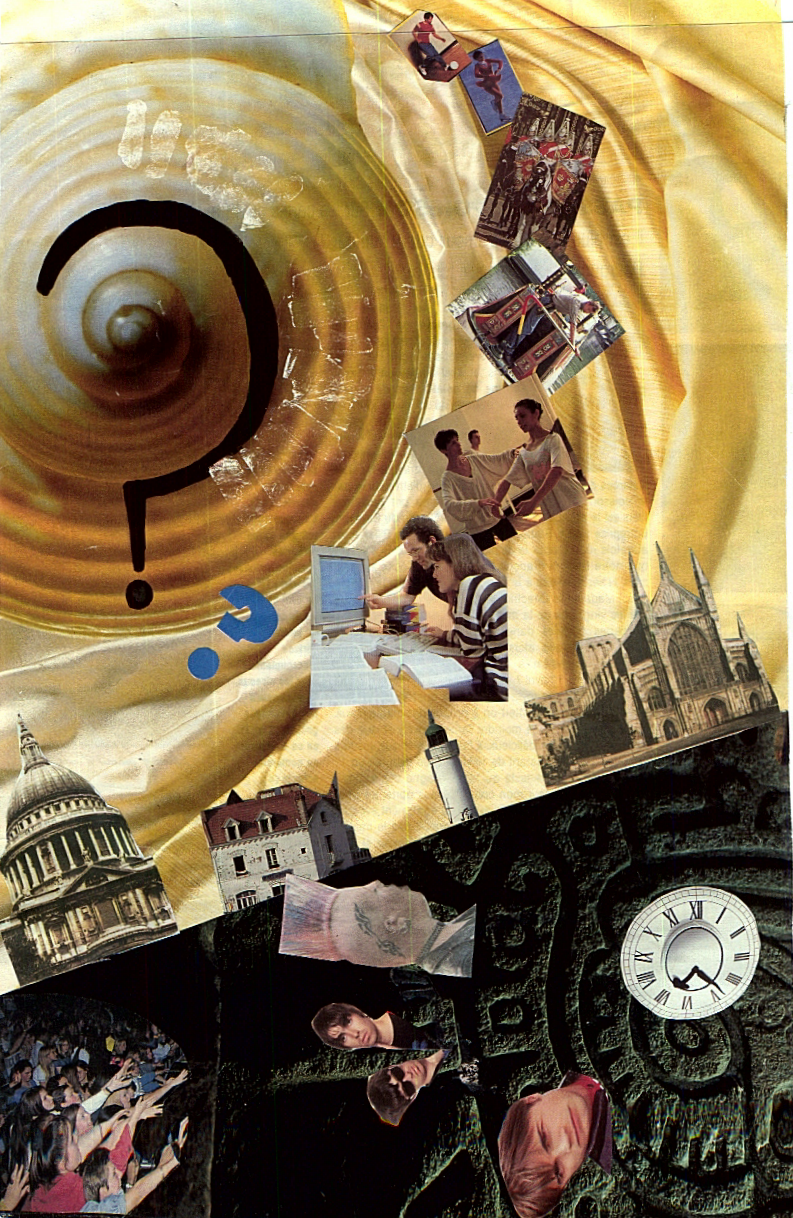
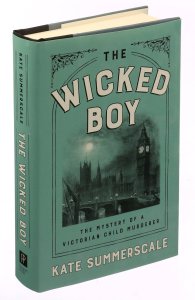


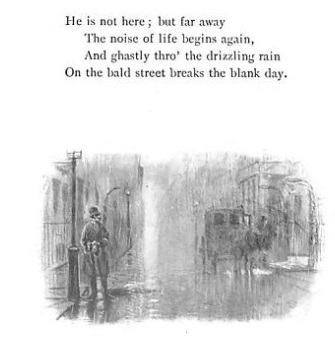
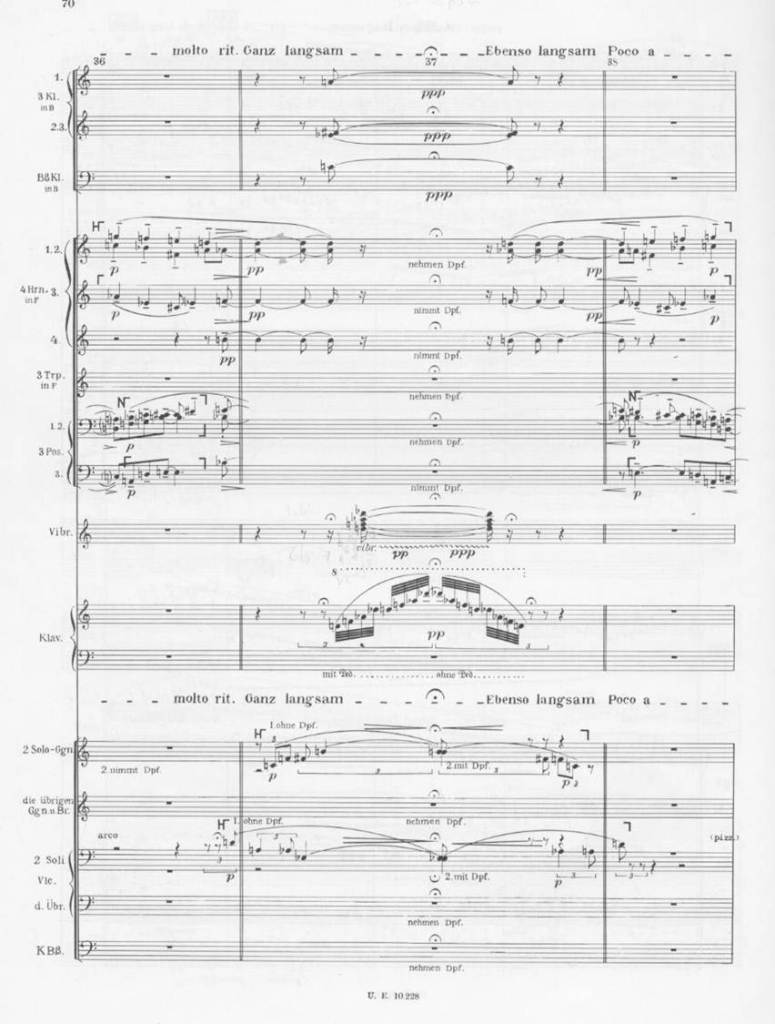

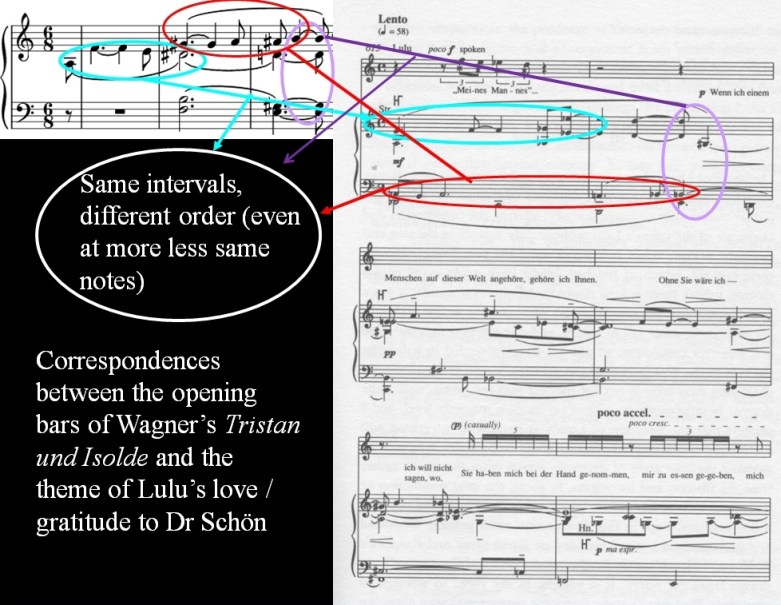
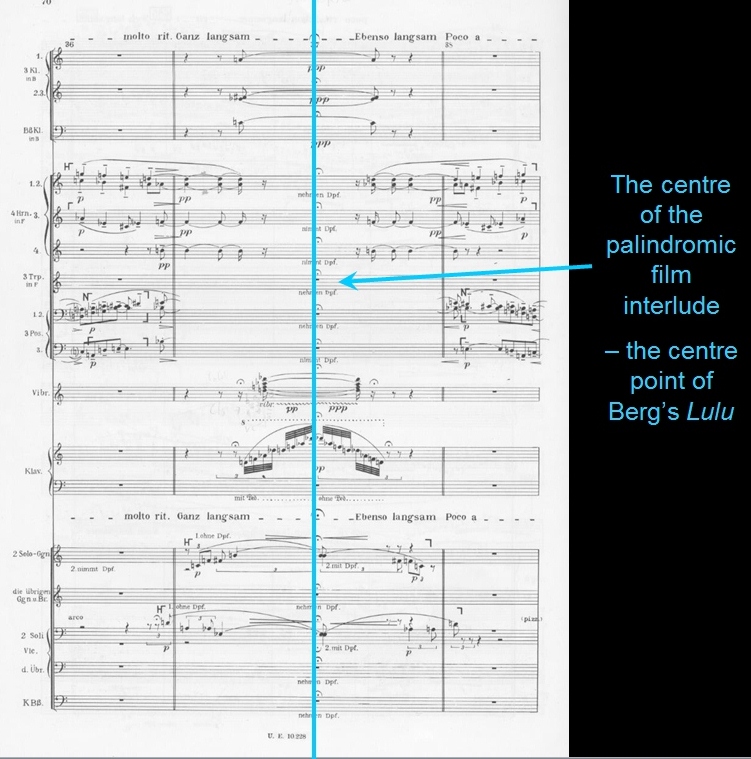


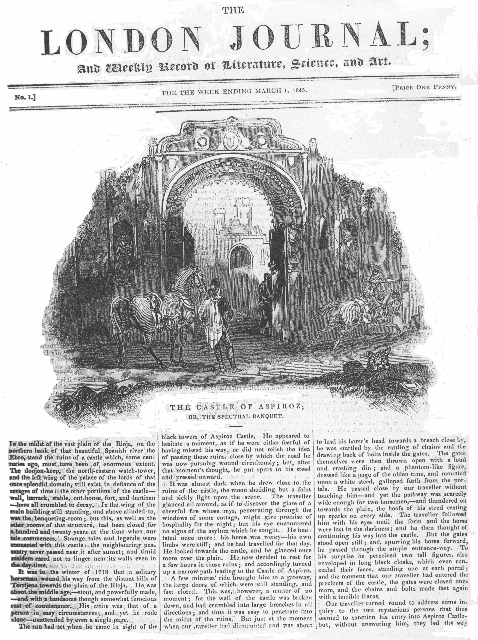

 Prof Andrew King